Concrete Repairs
Concrete does not last indefinitely and can deteriorate as a result of a variety of mechanisms. These include weathering, frost attack, erosion, impact and mechanical damage, overloading, shrinkage and contamination by aggressive chemicals such as acids or sulphates.
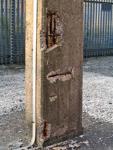
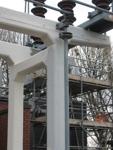
Also common is cracking and spalling of the surface caused by corrosion of embedded steel reinforcement induced by carbonation or chloride contamination of the concrete, or as a result of poor placement at the time of construction.
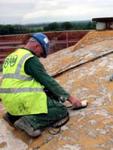
Cracked, softened, or otherwise degraded concrete is cut away prior to repair material being applied, and where steel reinforcement corrosion has occurred or surface contamination of the concrete is present, additional surface preparation work is undertaken in order to ensure an durable repair.
Concrete removal and preparation work makes use of traditional breaking, hydraulic bursting, hydro-demolition, high pressure water jetting and abrasive blasting techniques.
Reinstatement methods include hand application of lightweight cementitious mortars for small and cosmetic repairs, wet and dry spray techniques (gunite) and the use of repair concrete placed into formwork where more substantial or structural repair is required.
Concrete repair material systems used include those from established suppliers such as Flexcrete, Weber SBD, Feb/MBT, Sika and Fosroc.
INFORMATION
Ram Services technical staff have many years experience in investigating concrete deterioration, and regularly carry out visual inspections, hammer testing, cover meter surveys, and removal of samples for testing on and off site.
Our reports are comprehensive and highly regarded, and include details of observations made on site, proposals for remedial work and fully costed schedules detailing what is required.
Prior to repair, defective concrete needs to be properly assessed, so that the cause and extent of the deterioration can be identified, and appropriate repair measures put in hand.
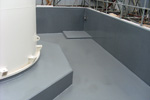
Other aspects of concrete repair work including grouting of crane rails and machine bases, crack repairs using injected low viscosity resins and the application of coatings to improve resistance to weathering or aggressive chemical environments